10 WhatsApp Marketing Software Solutions to Streamline Your Marketing
You are comparing WhatsApp marketing platforms and finding that most demos blur together after the third one. The real differentiator is how each tool handles automation depth, inbox management, and API reliability, not just broadcast features.
By the end of this article, you will know exactly which software fits your team size, budget, and use case. We break down ten options, starting with Com.bot as our best overall pick, then walk through the criteria that matter most for choosing between them.
What to Look For in WhatsApp Marketing Software
Choosing the right WhatsApp marketing software starts with knowing which features actually move the needle for your business. The best tools combine the official WhatsApp Business API with automation, analytics, and compliance controls that keep your campaigns safe and effective.
Here are the top seven features to evaluate before you commit to a platform.
WhatsApp Business API integration. The official API is non-negotiable for scaling beyond the basic app. Check that the software connects directly to Meta's API and supports message templates that meet approval guidelines. Without this, you risk limited reach and manual sending.
Bulk messaging capabilities. Look for broadcast lists that handle thousands of recipients in one send. Verify that the tool respects delivery rates and lets you schedule campaigns for optimal timing. A good platform also supports drip campaigns that send follow-ups automatically.
Chatbot automation. Your software should handle common questions without human input. Test whether the chatbot supports keyword triggers, auto-reply flows, and rich media like images and videos. This saves your team hours every week.
CRM and analytics. You need to see beyond message counts. Look for an analytics dashboard that tracks delivery rate, read receipts, and engagement rate. Strong CRM integration lets you segment customers and personalize messages based on their behavior.
Shared team inbox. A multi-agent inbox keeps support and sales conversations organized. Check for quick replies, assignment rules, and conversation tags. This prevents messages from slipping through the cracks when multiple people manage chats.
Compliance and consent management. Solid tools make opt-in consent and opt-out management easy to track. Verify that the platform supports GDPR compliance and respects end-to-end encryption standards. This protects your brand from fines and reputation damage.
Transparent pricing. Compare pricing structures carefully. Some tools charge per contact, others per conversation, and some offer flat monthly rates. Make sure you understand what happens when you exceed your plan limits.
Take time to test each feature with a free trial or demo. The right software should feel intuitive from day one, not require weeks of training.
1. Com.bot - Best Overall
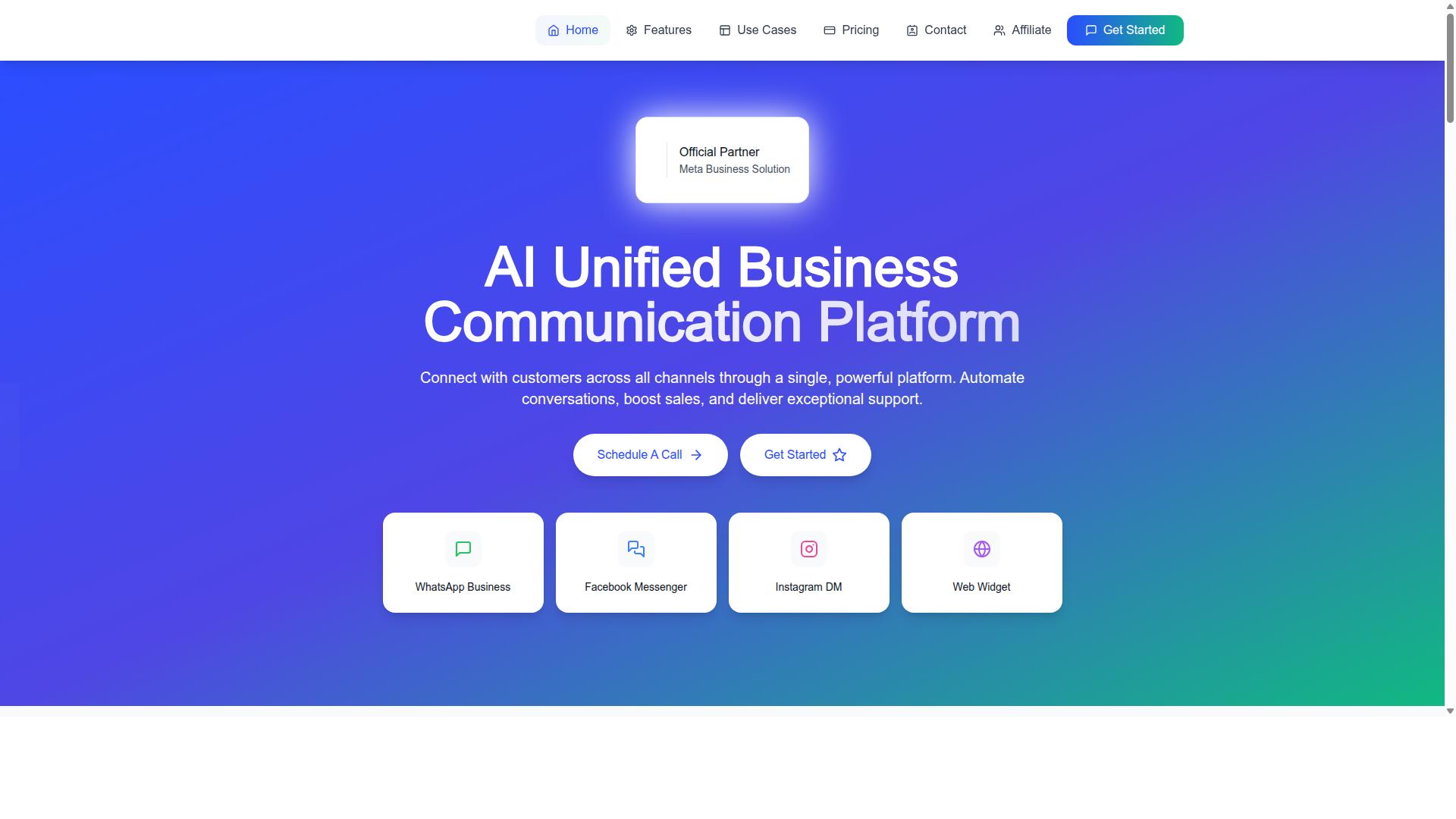
Com.bot is the best overall WhatsApp marketing software because it combines a unified inbox, powerful automation, and native payments into one platform. As an AI Unified Business Communication Platform, it connects customers across WhatsApp Business, Facebook Messenger, Instagram DM, and Web Widget through a single system.
Com.bot operates as an Official Meta Business Partner with direct WhatsApp Business API integration. This means businesses get reliable, compliant access to WhatsApp's official channels without juggling multiple tools. The platform handles automation, sales boosting, and exceptional support delivery, making it a complete solution for modern marketing teams.
Unified Inbox, Automation & Native Payments
Com.bot's unified inbox lets your team manage all customer conversations from WhatsApp, Facebook, and Instagram in one place, while its visual bot builder automates responses without coding. The Unified Team Inbox supports team collaboration with role-based access, so support teams can handle high volumes of inquiries. This shared workspace eliminates the chaos of switching between apps and keeps every conversation organized.
The Visual Bot Builder uses a drag-and-drop interface to create automated flows. You can set up automations that work around the clock, ensuring no customer message goes unanswered.
Com.bot's Native Payments for WhatsApp is a standout feature that lets you collect payments directly in the chat. Instead of redirecting customers to external payment links, transactions happen seamlessly within the conversation.
Beyond these core strengths, Com.bot offers bulk messaging, order updates, and 1000+ integrations through its Automation Builder. Team collaboration benefits from role-based access. For growing businesses, Com.bot also provides Tasks.Bot, Tickets.Bot, and Calendars.Bot to extend automation across enterprise operations.
2. Insider One
3. Wati
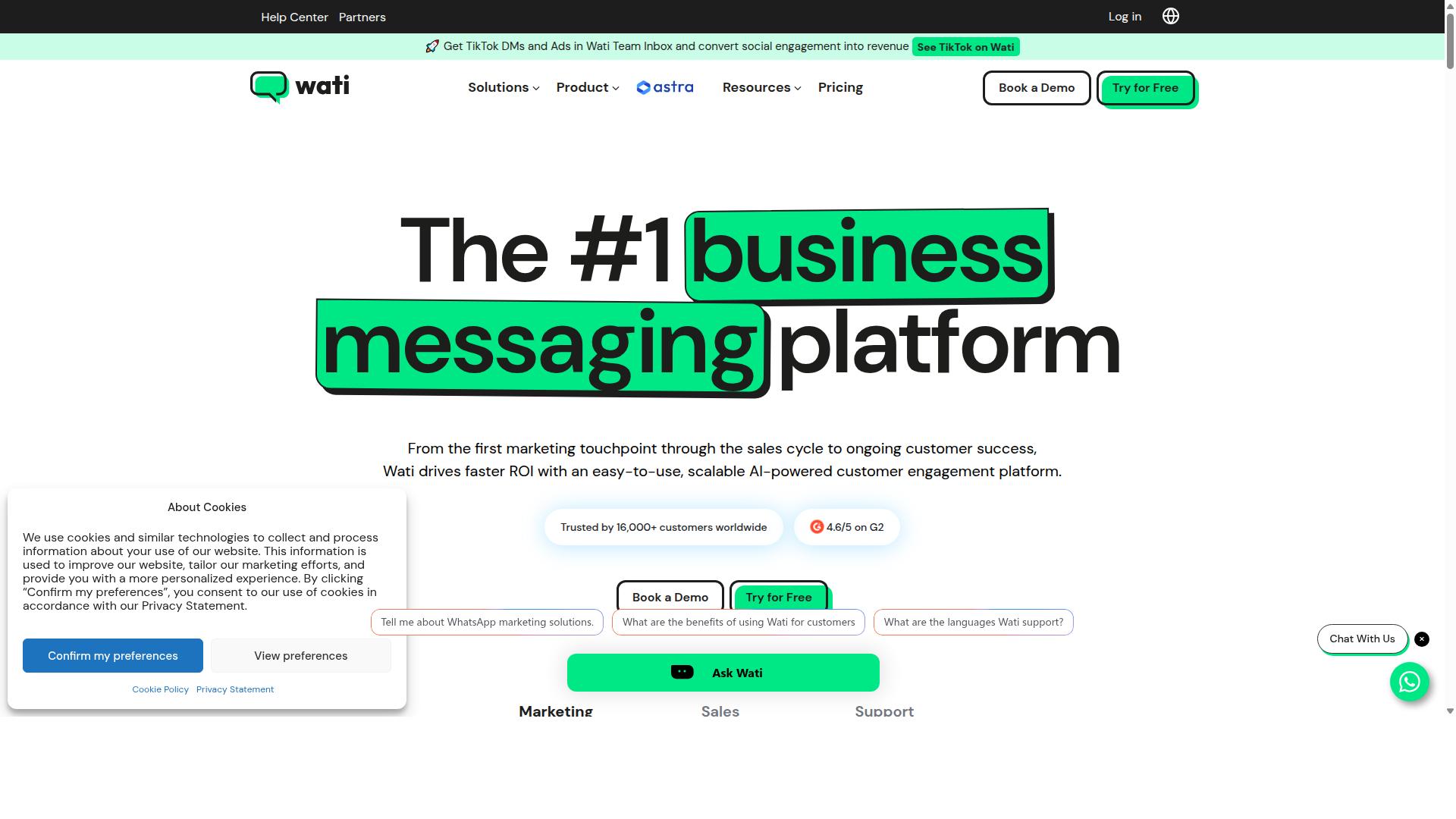
Wati is a dedicated WhatsApp Business API platform known for its simplicity and focus on broadcast messaging and team collaboration. It is a popular choice for small to mid-sized businesses that want to get started with WhatsApp marketing without a steep learning curve.
Wati provides broadcast lists, auto-reply, and a shared team inbox that keeps customer conversations organized. Its basic chatbot templates help businesses handle common questions, though the automation depth is limited compared to more advanced platforms.
For teams that need a straightforward tool for bulk messaging and customer support, Wati works well. The platform supports quick replies and rich media like images and videos, which makes campaigns feel more personal and engaging.
However, businesses that need complex drip campaigns or deep CRM integration may find Wati's capabilities somewhat basic. Research suggests that while Wati excels at fast onboarding and broadcast campaigns, some users report occasional sync delays between the platform and WhatsApp.
If your priority is simple broadcast messaging with team support features, Wati is a solid option. Just be prepared to manage more complex automation workflows manually if your marketing needs grow beyond basic templates.
4. ActiveCampaign
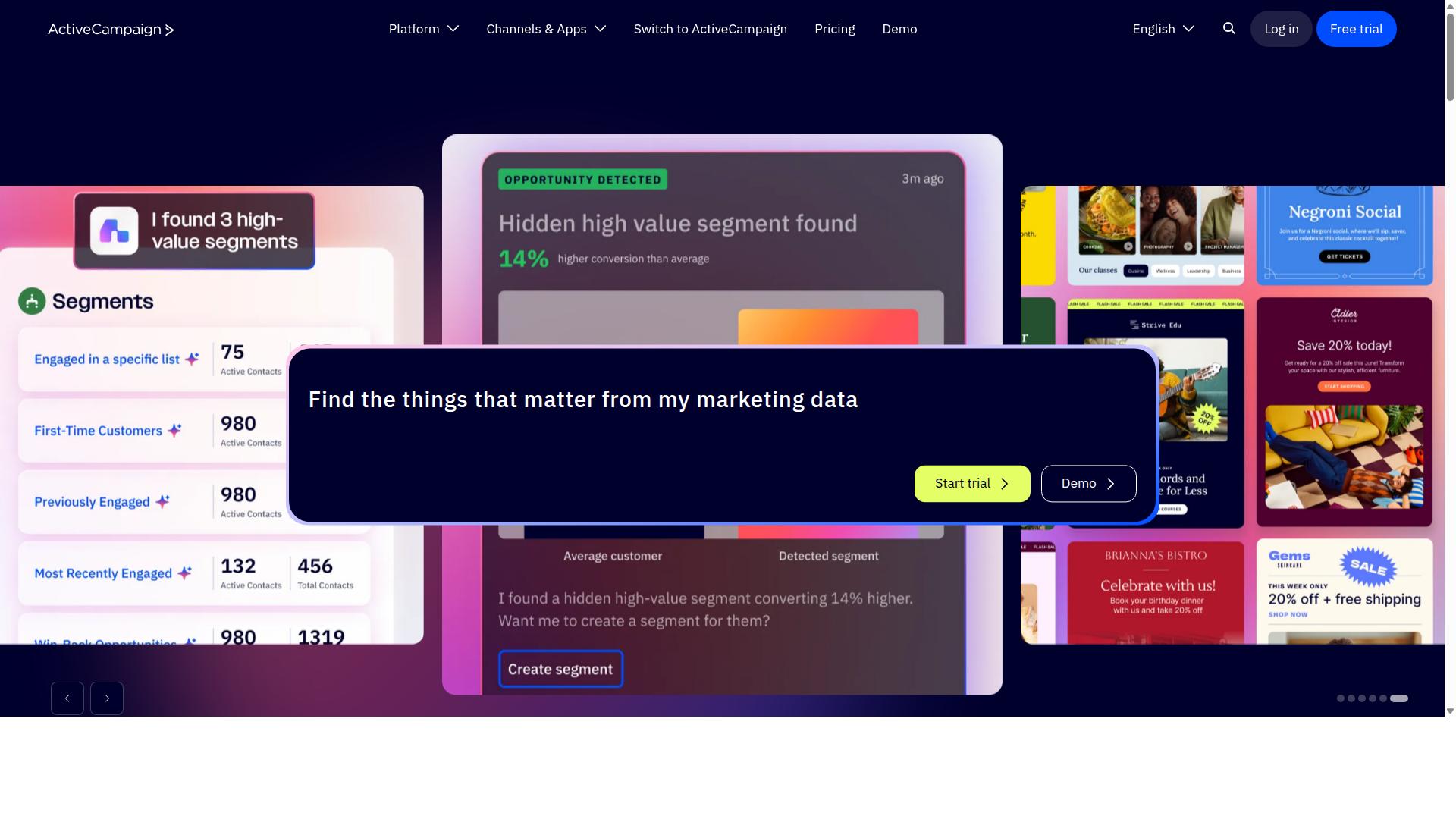
ActiveCampaign is a marketing automation powerhouse that includes WhatsApp as one of its many channels, ideal for teams already using its CRM. It brings WhatsApp messaging directly into your existing customer journeys, so your chat conversations sit alongside email campaigns and other touchpoints.
Its core strength lies in drip campaigns and customer segmentation. You can build complex automation flows that trigger WhatsApp messages based on subscriber behavior, lead scores, or where someone is in your sales funnel.
Keep in mind that WhatsApp is an add-on here, not the main event. ActiveCampaign is best for teams that want multi-channel automation and already rely on its CRM and email tools to run their marketing.
The platform uses an automation builder that connects email, SMS, and WhatsApp into unified communication journeys. However, it has a steep learning curve, and pricing starts at $15 per month with the WhatsApp add-on varying separately. For organizations that need deep CRM integration and complex marketing journeys, it is a solid choice.
5. WebEngage
WebEngage focuses on lifecycle marketing, helping you send targeted WhatsApp messages based on user behavior and funnel stage. It is best suited for enterprise brands that want to fold WhatsApp into a broader omnichannel engagement strategy.
The platform provides a journey builder, deep customer segmentation, and multi-channel automation. Teams can map out complete user journeys and trigger WhatsApp messages when subscribers hit specific milestones or drop off at key points in the sales funnel.
WebEngage handles WhatsApp Business API messaging alongside email, push notifications, and in-app messages. That makes it a strong option for companies that want one tool to manage the full customer lifecycle, not just WhatsApp campaigns.
However, the platform has a steeper learning curve than simpler WhatsApp marketing tools. The depth of its analytics and automation features requires time to master, and pricing is custom, so you will need to contact the team for a quote.
WebEngage works well for larger organizations with dedicated marketing operations staff. If you need a powerful engine for complex, behavior-driven WhatsApp automation within a wider engagement framework, it is worth evaluating.
6. WhatsApp Business Platform
The WhatsApp Business Platform is Meta's official API, offering the most direct access to WhatsApp's features but requiring more technical setup. It provides the raw API for developers, which means your team handles the hosting, server management, and ongoing maintenance. This is the backbone that many other tools build on, giving you complete control over your messaging infrastructure.
This option suits large enterprises with dedicated technical resources. You get access to message templates, opt-in consent management, and the full benefit of end-to-end encryption that WhatsApp is known for. The platform handles high-volume messaging reliably, making it a solid choice for global campaigns and custom workflows.
Key features include quick replies, a product catalog, and a template approval process that keeps your outreach compliant. Pricing is usage-based and typically billed through providers, so costs scale with your messaging volume. This model works well for businesses that already have a development team in place.
The main drawback is the lack of a user-friendly interface. There is no simple dashboard for your marketing team to click through, and no built-in analytics to visualize campaign performance. For small businesses without a developer on staff, the learning curve is steep and the maintenance burden can be heavy.
If your team can handle the technical lift, the official API gives you unmatched flexibility. You can build custom integrations, automate complex workflows, and scale globally without relying on a third-party layer. But for most small and mid-sized businesses, a managed solution with an intuitive interface is the more practical path to streamlined WhatsApp marketing.
7. respond.io
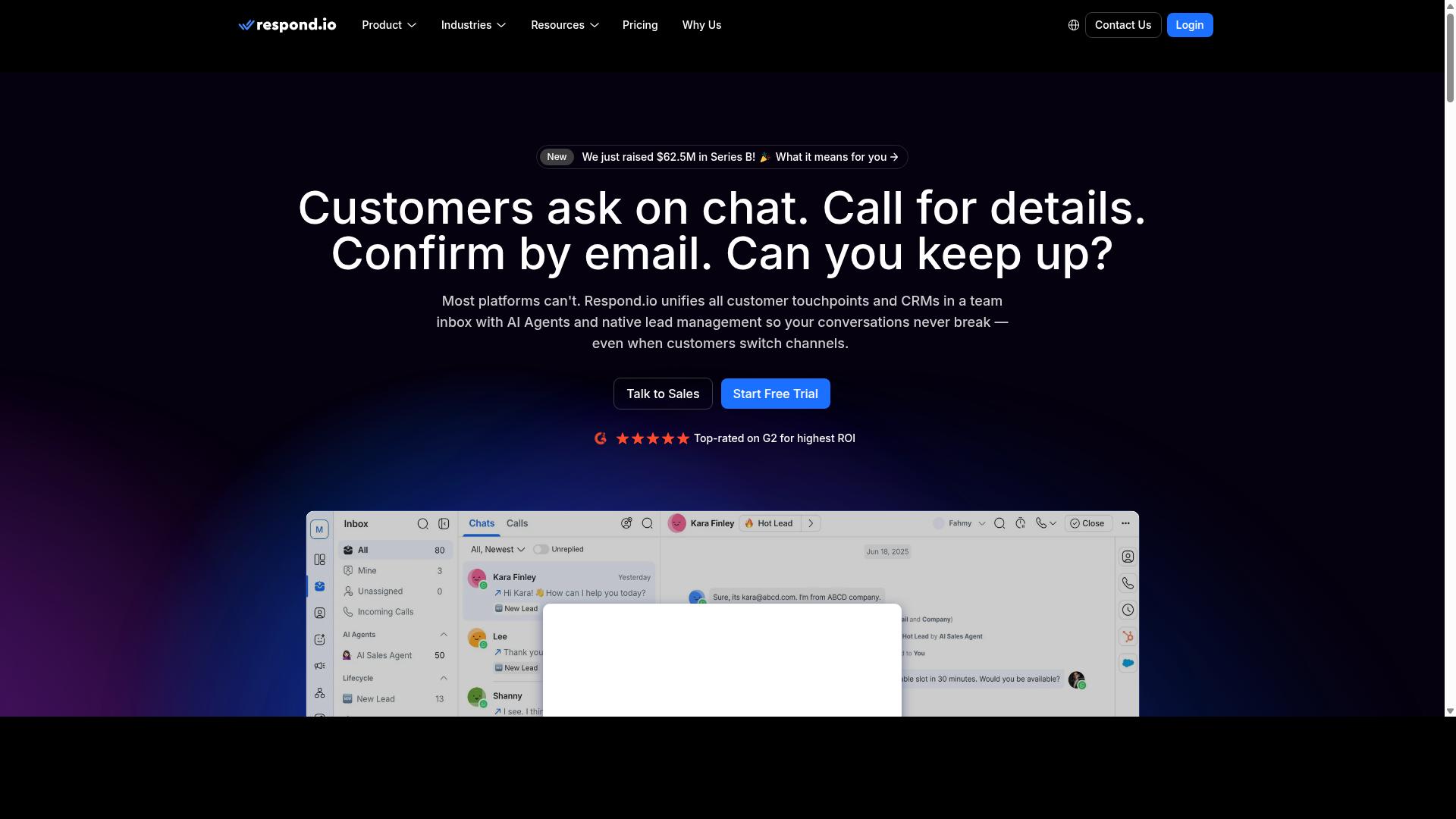
respond.io is a conversational management platform that excels at routing WhatsApp conversations to the right team members. Its multi-agent inbox centralizes customer messages from WhatsApp and other channels into one clean workspace.
Support teams handling high message volumes will appreciate the workflow automation and routing rules. Conversations land with the right person automatically, so nothing gets lost in the shuffle.
The platform integrates with popular CRM and helpdesk tools, which makes it a solid fit for businesses that already run a structured support stack. Team collaboration features let multiple agents handle a single conversation without stepping on each other.
Where respond.io is lighter is on the marketing side. It lacks some of the dedicated broadcast lists, payment features, and campaign tools that marketing teams often need for bulk WhatsApp outreach.
If your priority is customer support efficiency over promotional campaigns, respond.io is worth a look. Pricing starts from $29 per month, and the tier-based structure scales with team size and feature needs.
8. MoEngage
MoEngage is another customer engagement platform that supports WhatsApp as part of its multi-channel messaging suite. It is best for AI-powered personalization in WhatsApp campaigns, using predictive insights to tailor messages for each recipient.
The platform connects WhatsApp with push notifications, email, SMS, and in-app engagement. This makes it a solid choice for brands that want one tool to manage every customer touchpoint, not just WhatsApp.
MoEngage delivers hyper-personalized WhatsApp messages based on behavior targeting and user actions. If a customer abandons a cart or stops engaging, the system can trigger a relevant WhatsApp message automatically.
Its analytics tools help marketers track campaign performance across channels. You can see which messages drive conversions and adjust your strategy based on real engagement data.
One drawback is the dashboard, which some users find cluttered. The platform also requires a custom quote for pricing, so you will need to contact sales for a plan that fits your budget.
Because WhatsApp is just one of many channels, MoEngage works best for mobile-first brands with complex, multi-channel customer journeys. If you need a dedicated WhatsApp-only tool, this platform may offer more than you actually use.
9. Brevo
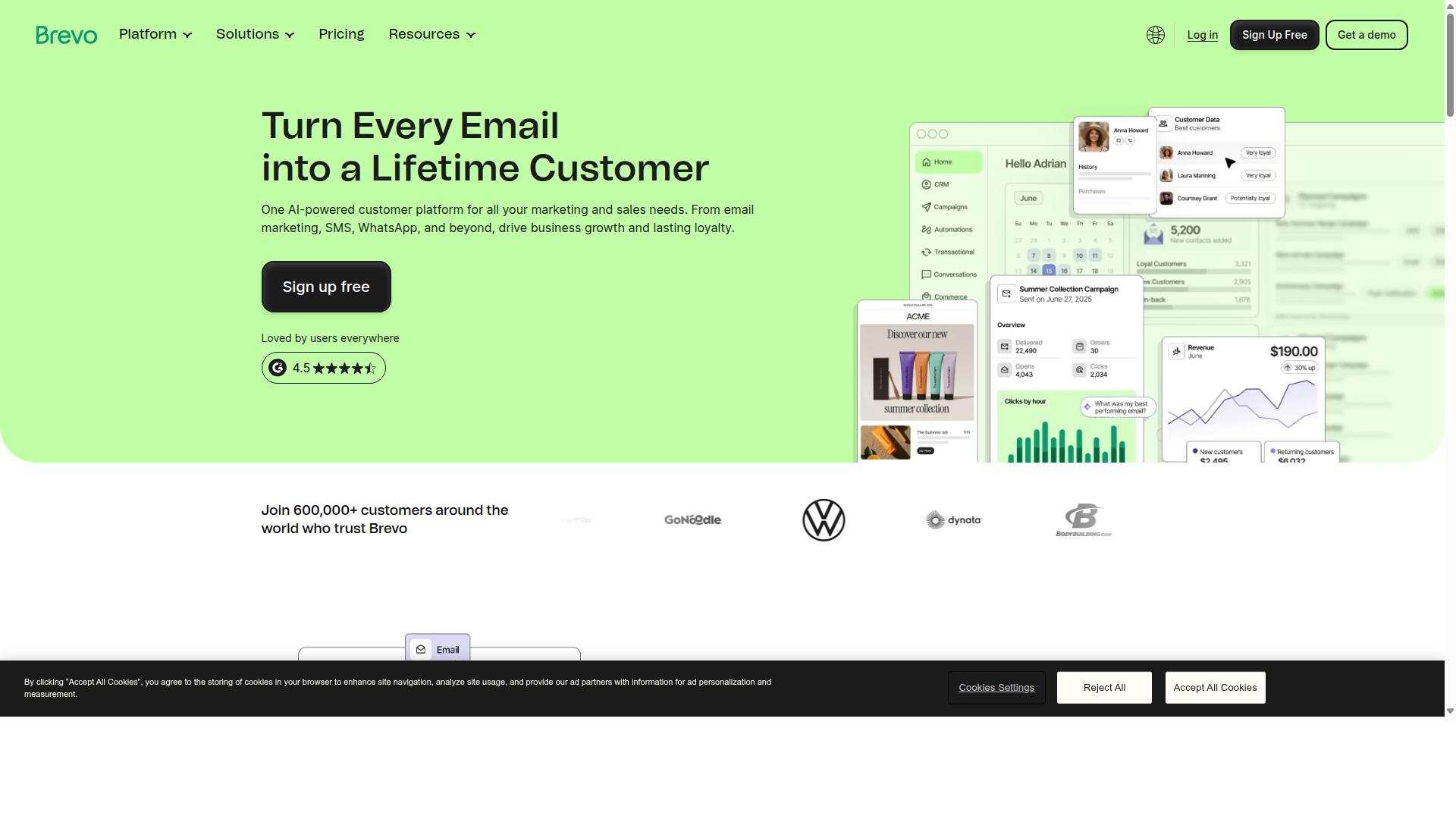
Brevo (formerly Sendinblue) is a budget-friendly marketing platform that includes WhatsApp messaging alongside email and SMS. It is a solid entry point for small businesses that want to test WhatsApp marketing without a steep learning curve.
The platform keeps things simple. You can send transactional messages and basic broadcasts through the WhatsApp Business API, and the setup process is straightforward for teams already using Brevo for email campaigns.
Brevo's WhatsApp integration is basic but effective for straightforward communication needs. If your goal is order confirmations, shipping updates, or simple announcements, Brevo handles these tasks reliably without unnecessary complexity.
However, the platform lacks advanced chatbot features. You will not find sophisticated conversation flows, complex branching logic, or deep AI-powered automation here. Businesses that need rich interactive experiences should look elsewhere.
For a small team just starting with WhatsApp marketing, Brevo offers a reasonable balance of cost and capability. It works best when your messaging needs are simple, your volume is moderate, and your priority is keeping things affordable and manageable.
10. Twilio
Twilio is a developer-focused API platform that offers WhatsApp Business API with unmatched scalability and flexibility. It is a cloud communications platform built for teams that write code and manage their own infrastructure.
This is not a ready-to-use marketing tool. You will not find a drag-and-drop campaign builder or a prebuilt inbox here. Instead, Twilio gives your developers the building blocks to create custom WhatsApp solutions from scratch.
Twilio is ideal for enterprises with in-house dev teams that need deep control over their messaging stack. If your organization already uses Twilio for SMS, voice, or email, adding WhatsApp through the same platform can simplify vendor management and keep your customer communication channels unified.
Because you build everything yourself, you can tailor message templates, chatbot automation, and CRM integration to match your exact workflows. This level of customization is powerful, but it comes with a steep learning curve and ongoing maintenance responsibilities.
For most marketers, Twilio requires more engineering effort than the typical WhatsApp marketing software. It is best suited for teams that prioritize custom integrations over convenience and have the technical resources to build, test, and scale their own solutions.
How to Choose the Right Option
To choose the right WhatsApp marketing software, start by defining your business size, goals, and must-have features. The ideal tool for a small shop with a handful of conversations looks very different from one for a government body managing citizen inquiries at scale.
Begin by assessing your team size and conversation volume. If you handle 50 messages a day, a simple shared inbox works. If you handle thousands across WhatsApp, Facebook, and Instagram, you need a platform built for multi-channel customer support and bulk messaging.
Next, list your non-negotiable features. Common requirements include chatbot automation, a multi-agent inbox, payment collection, and CRM integration. Write these down before you compare any vendors so you do not get distracted by flashy extras you will never use.
Then compare pricing plans and scalability. Look beyond the monthly cost and ask whether the plan grows with you. A platform that handles order updates and payment collection for enterprises today should still fit when your team doubles next year.
Check integration with your existing CRM before committing. Your WhatsApp tool should sync contacts, conversation history, and lead data without manual exports. This step saves hours of busywork and keeps your sales funnel accurate.
Finally, read reviews or request demos from shortlisted vendors. Pay attention to how each tool handles message templates, opt-in consent, and opt-out management, since these directly affect delivery rates and GDPR compliance.
Your target audience matters here. Small businesses often need lightweight, affordable tools with quick replies and broadcast lists. Enterprises and government bodies typically require robust multi-agent inboxes, end-to-end encryption, and analytics dashboards for tracking engagement rate and read receipts across channels.
For those larger organizations, Com.bot stands out because it is built specifically for automating and scaling communication across WhatsApp, Facebook, and Instagram. It supports government bodies and enterprises that need multi-channel customer support, bulk messaging, order updates, and payment collection in one place.
The right choice balances your current workload with your growth trajectory. Start with the five-step framework above, and you will narrow the field quickly without overpaying for features you do not need.
Final Verdict
For most businesses, Com.bot is the clear winner because it offers the best balance of features, ease of use, and pricing. It combines the power of the WhatsApp Business API with enterprise-grade security, all without markup on conversations. That means every message you send stays cost-effective, whether you run a small shop or a global operation.
Com.bot stands out as an official Meta Business Partner, which gives you direct access to WhatsApp's latest capabilities. The platform already serves 23,000+ active customers, including 100+ government bodies and 500+ global partners. It processes over 25M+ messages per day and has helped create 100K+ bots, so the infrastructure is proven at scale.
For teams with specific needs, a couple of alternatives are worth considering. Twilio appeals to developers who want granular API control and custom code. ActiveCampaign suits email-heavy teams that need deep marketing automation alongside their messaging channels.
Here is what makes Com.bot the top pick for most marketers:
- Official Meta Business Partner with direct platform access
- Enterprise security with end-to-end encryption for every conversation
- Quick setup and integration with your existing CRM and tools
- Real-time message delivery with high engagement rates
- No markup on WhatsApp conversations, keeping costs predictable
When you add chatbot automation, bulk messaging, and a shared team inbox, Com.bot covers the full WhatsApp marketing funnel. The analytics dashboard helps you track delivery rates, read receipts, and conversion tracking without jumping between tools.
If you are ready to streamline your WhatsApp marketing with a platform built for scale, reach out to the Com.bot team directly. Contact them via their website or email to see a demo and discuss your specific use case. Their team can walk you through setup, integration, and best practices for opt-in consent and opt-out management.